



Have you ever been on a long flight, halfway across the ocean, when the captain’s voice comes over the speakers with news that changes everything? That’s exactly what happened to the passengers and crew of Delta Flight DL275 on May 27, 2025. What should have been a smooth overnight trip from Detroit to Tokyo turned into an unexpected 12-hour journey ending in Los Angeles.
I’ve followed aviation stories for years, and this one stands out—not because of panic or danger, but because of how calmly and professionally everyone handled a serious situation thousands of miles from home. In this article, we’ll walk through exactly what occurred during the Delta Flight DL275 Japan diversion LAX, why the pilots made the choices they did, what passengers experienced, and what you can learn if your own flight ever gets diverted.
What Was Delta Flight DL275 Supposed to Be?
Delta Flight DL275 is a regular long-haul service connecting Detroit Metropolitan Wayne County Airport (DTW) with Tokyo Haneda Airport (HND). Operated by one of Delta’s modern Airbus A350-900 widebody jets, the flight typically takes around 13 hours and carries hundreds of passengers across the Pacific.
On that particular evening, the aircraft (registration around N508DN) left Detroit almost two hours late. The delay came from the incoming flight from Amsterdam. Passengers boarded, settled into their seats—some in the spacious business class lie-flats, others in premium economy or standard economy—and prepared for a quiet night flight to Japan.
Everything felt normal at first. Meals were served, lights dimmed, and the plane climbed to its cruising altitude of about 38,000 feet. Then, roughly five hours in, over the cold waters of the Bering Sea, something changed.
The Moment the Delta Flight DL275 Japan Diversion LAX Began
While flying southwest of Anchorage, Alaska, the flight crew received a warning about the anti-ice system on one of the Rolls-Royce Trent XWB engines. In simple terms, this system prevents ice from forming on the engine intakes at high altitudes where temperatures can drop far below freezing. According to reports, this precautionary diversion was handled smoothly by the crew.
Ice buildup might seem minor, but over the open ocean it’s no small concern. It can affect engine performance and reduce safety margins. The pilots didn’t wait to see if the problem would worsen. They made the professional, safety-first decision to turn the aircraft around.
Instead of continuing to Tokyo or landing at a closer airport like Anchorage, they set a course for Los Angeles International Airport (LAX). That choice turned the flight into the now-famous Delta Flight DL275 Japan diversion LAX—a journey that stretched over 12 hours and 15 minutes before touching down safely just after 1 a.m. local time.
Why Fly All the Way to LAX? The Smart Reasoning Behind the Decision
Many people watching on flight tracking apps wondered the same thing: why not land closer? Anchorage or Seattle would have been quicker on paper. But aviation decisions go far beyond simple distance.
LAX is a major Delta hub with full maintenance facilities for the A350, including spare parts and highly trained technicians familiar with this exact aircraft type. Diverting there meant the plane could be fixed properly and returned to service faster, while passengers could be rebooked on other flights to Tokyo more easily.
The Delta Flight DL275 Japan diversion LAX showed how airlines balance immediate safety with long-term operational efficiency. Continuing with even a small technical limitation over the vast Pacific wasn’t worth the risk. The crew’s conservative choice protected everyone on board.
Life On Board: How Passengers Handled the Unexpected Turn
From passenger accounts shared afterward, the cabin remained calm throughout. The captain addressed everyone clearly over the public address system, explaining the situation without causing alarm. He emphasized that this was a precautionary measure and that safety was the top priority.
Crew members walked through the cabin, answering questions and providing extra snacks and drinks. Many passengers actually appreciated the transparency. One traveler later posted that the crew handled it “like it was just another Tuesday,” which helped keep anxiety low.
After landing at LAX in the middle of the night, Delta staff were waiting at the gate. They arranged hotel rooms for those who needed them, offered meal vouchers, and started working on rebooking options right away. Some passengers made it to Tokyo later that same day on different flights.
Breaking Down the Technical Issue
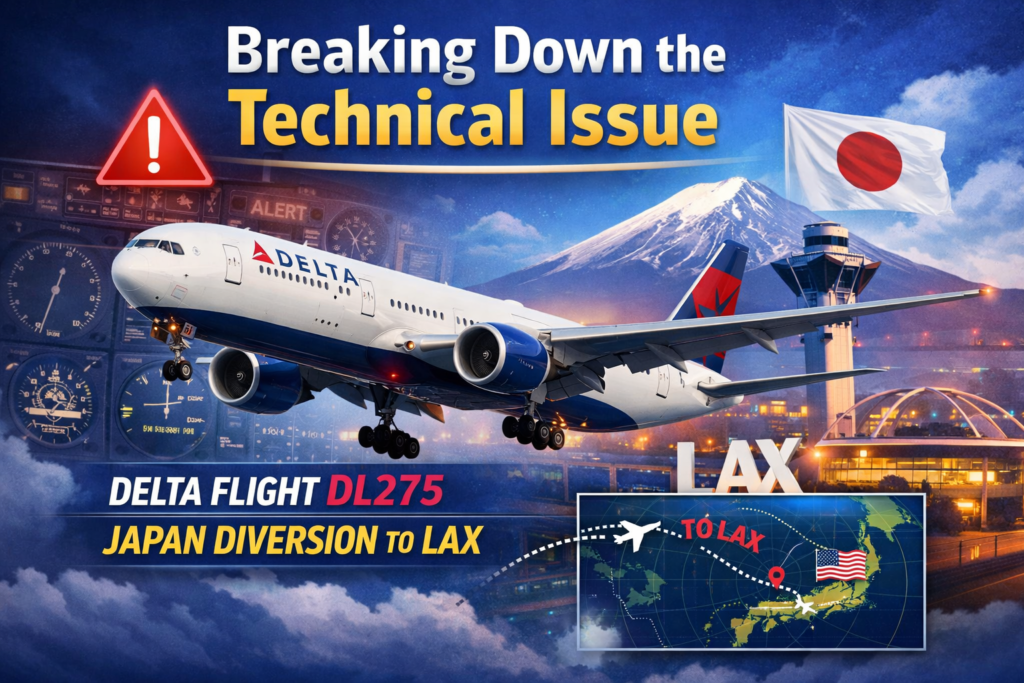
The anti-ice system on the A350’s engines uses warm air from the engines themselves to heat the inlet areas. At cruising altitudes over the North Pacific, conditions are perfect for ice formation if that system isn’t working perfectly.
This wasn’t an engine failure or smoke in the cabin—nothing immediately life-threatening. But in aviation, you don’t take chances with “what ifs,” especially far from land. The Delta Flight DL275 Japan diversion LAX was a textbook example of proactive decision-making that prevents small problems from becoming big ones.
What This Means for Everyday Travelers
Flight diversions like this are rare, especially on long international routes. Still, knowing what to expect can make a big difference if it ever happens to you. Here are some practical tips:
- Pack smart in your carry-on: Always include a change of clothes, basic toiletries, medications, and a portable charger. You never know when an overnight stay might be needed.
- Stay informed: Download your airline’s app before boarding. It often provides faster updates than gate agents during irregular operations.
- Understand your rights: On international flights, airlines must provide meals, accommodation, and rebooking if the diversion is due to technical reasons under their control.
- Keep calm and communicate: Listen to the crew, ask polite questions, and remember they’re working hard to get everyone to their destination safely.
- Document everything: Take notes or photos of vouchers and communications. This helps if you need to file for any goodwill compensation later.
The Delta Flight DL275 Japan diversion LAX reminded many frequent flyers how important flexibility is when traveling long distances.
How Delta’s Response Stacked Up
Delta earned praise for its handling of the situation. From the cockpit communication to ground support in Los Angeles, the airline focused on keeping passengers informed and cared for. The aircraft itself was back in service relatively quickly after maintenance at LAX.
In an era where every diversion gets shared instantly on social media, this one showed what good crisis management looks like—quiet competence rather than flashy promises.
Lessons from the Delta Flight DL275 Japan Diversion LAX for the Aviation Industry
This event highlighted several important points. First, modern aircraft like the A350 are incredibly reliable, but they still operate in extreme environments where even minor system alerts deserve serious attention.
Second, hub airports like LAX play a crucial role in long-haul operations. Their extensive facilities can turn potential multi-day disruptions into manageable delays.
Finally, it reinforced that human judgment—those pilots weighing risks in real time—remains the most important safety feature in any airplane.
Preparing for Your Next Long-Haul Flight
Whether you fly across the Pacific once a year or every month, incidents like the Delta Flight DL275 Japan diversion LAX teach us to travel prepared. Check weather and aircraft status before you leave. Build some buffer time into your itinerary. And remember that the people flying and maintaining these planes train constantly for moments exactly like this.
If your flight ever turns around mid-ocean, try to see it not as a ruined trip, but as professionals doing their job to keep you safe.
FAQs
1. What caused the Delta Flight DL275 diversion to LAX?
A malfunction in one engine’s anti-ice system was detected mid-flight over the Pacific. Pilots chose to divert as a safety precaution.
2. Why didn’t the flight land in Alaska or Seattle instead?
LAX offered superior maintenance facilities for the A350, better rebooking options, and full Delta support, making it the most practical choice despite the longer flight time.
3. How long was the diverted flight?
The total airborne time from Detroit to Los Angeles was approximately 12 hours and 15 minutes.
4. Were passengers compensated?
Delta provided hotels, meals, and rebooking. Many received goodwill gestures, though formal compensation depends on specific circumstances.
5. How common are diversions like this?
Technical diversions happen occasionally on long-haul routes, but they are rare. Modern aircraft and strict maintenance keep most flights routine.
Final Thoughts: Safety Always Comes First
The Delta Flight DL275 Japan diversion LAX wasn’t dramatic in the Hollywood sense—no emergency slides, no injuries, no chaos. Instead, it was a powerful example of aviation working exactly as it should: identifying a potential issue early, making the safest choice, and taking care of people throughout.
Next time you see a flight tracker showing an unexpected path, you’ll have a better idea of what might be happening up there. And you’ll appreciate the skilled teams who make sure every flight, even the diverted ones, ends safely on the ground.
Safe travels out there. If you’ve experienced a diversion yourself, drop a comment below—I’d love to hear your story and what you learned from it. And if you’re planning a trip to Japan soon, here’s hoping yours is beautifully uneventful.
You may also read newsprimeo.