

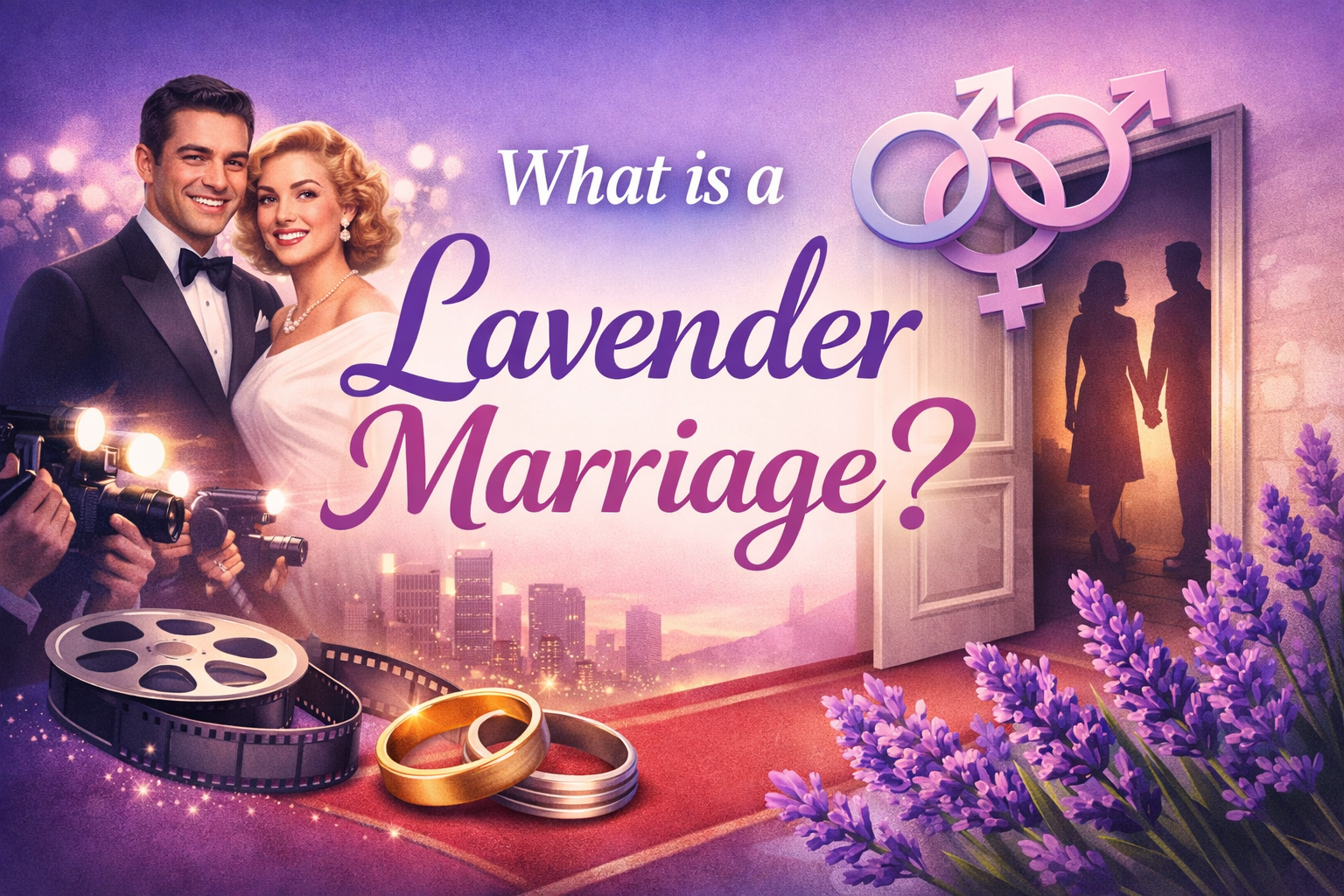
Imagine flipping through an old Hollywood magazine from the 1950s. You see a dashing leading man and his beautiful wife smiling at a movie premiere. They look perfect together—happy, in love, the ideal couple. But what if that picture was carefully staged? What if their marriage was never really about romance at all?
This is the world of the lavender marriage—a fascinating piece of history that still sparks curiosity today. These were real unions between a man and a woman, but often arranged so one (or both) partners could hide their true sexual orientation from a judgmental public. In this article, we’ll explore exactly what a lavender marriage is, where the term came from, the famous stories behind it, the emotional side, and how the idea is showing up in new ways in our modern world.
Whether you’re a history buff, a film fan, or just someone interested in human relationships, you’ll walk away with a clearer understanding and plenty to think about.
What Exactly Is a Lavender Marriage?
A lavender marriage is a marriage between a man and a woman that serves as a cover. One or both partners are typically gay, lesbian, or bisexual, but they present as a straight couple to the outside world. The goal is protection—protecting careers, reputations, families, or personal safety in times when being openly queer could destroy lives.
The marriage might look completely normal from the outside: shared home, public appearances, even children in some cases. But behind closed doors, romantic or sexual intimacy between the couple is often missing or minimal. Instead, the partners might have private relationships elsewhere, all while keeping up the public act.
It’s sometimes called a “marriage of convenience,” but that phrase doesn’t capture the full emotional weight. These weren’t always cold business deals. Some couples built deep friendships and genuine care for each other. Others struggled with loneliness, resentment, or heartbreak.
Why Is It Called a “Lavender” Marriage?
The color lavender has long been tied to queer culture. In the early 20th century, it became a subtle code. Lesbians exchanged violets as a quiet nod to the ancient Greek poet Sappho. Oscar Wilde and others used purple shades in coded writing. By the 1920s and 1930s, “lavender” was whispered in Hollywood circles to describe these strategic unions.
The term didn’t appear in widespread print until later, but the idea was already alive. During the “Lavender Scare” in the 1950s, the U.S. government even purged suspected gay employees, adding to the pressure to stay hidden. The color lavender, once a signal of hidden identity, gave these marriages their memorable name.
The Historical Roots in Old Hollywood
Lavender marriages became especially common during Hollywood’s Golden Age. In the 1920s, movie studios added strict “morality clauses” to actors’ contracts. If a star’s personal life caused a scandal, the studio could drop them instantly. Being openly gay or lesbian was career suicide.
Studios often encouraged—or outright arranged—these marriages to keep their biggest stars marketable. Publicists crafted love stories for the press. Photographers captured “happy couple” moments. The goal was simple: make everyone believe the star was straight.
This pressure came from a society where homosexuality was not just frowned upon but often illegal or pathologized. Actors faced blackmail threats from tabloids, loss of roles, and social exile. A lavender marriage offered a shield.
Famous Examples That Still Fascinate Us
One of the earliest and most talked-about cases involves silent film star Rudolph Valentino and actress Jean Acker. They married in 1919, but the wedding night reportedly ended with Acker locking Valentino out of the bedroom. Their marriage was short and rocky, and both were rumored to be queer. It became tabloid fodder and one of the first high-profile examples.
Another iconic story is Rock Hudson, the handsome leading man of the 1950s. Rumors about his sexuality grew so loud that his agent quickly arranged a marriage to Phyllis Gates, his agent’s secretary, in 1955. They stayed together for three years before divorcing. Gates later said she believed it was real love at first, but the relationship fell apart. Hudson’s story gained even more attention after he became one of the first major celebrities to die from AIDS-related complications in 1985.
Judy Garland and director Vincente Minnelli married in 1945 and had a daughter, Liza Minnelli. Their six-year marriage has long been speculated about, with many believing Minnelli was gay. Garland herself reportedly once advised her daughter that gay men make the best husbands—hinting at her own experiences.
Other rumored or confirmed cases include:
- Barbara Stanwyck and Robert Taylor
- Cary Grant and his early marriages (though debated)
- Composer Cole Porter and his wife Linda Lee Thomas, whose long marriage seemed built on deep companionship rather than romance
These stories show how varied lavender marriages could be. Some were short and ended in quick divorces. Others lasted decades, with real affection growing between the partners despite the original reasons.
The Human Side: What It Felt Like
Living in a lavender marriage wasn’t just about red carpets and photo shoots. It often meant living a double life every single day.
For the queer partner, there was constant fear of being exposed. Every public kiss or anniversary post was a performance. Many felt deep guilt or sadness about deceiving their spouse or the public.
For the straight partner (when one existed), discovering the truth could feel like betrayal. Some stayed because they valued the lifestyle, friendship, or financial security. Others left once they learned the full story.
Yet not every story was tragic. Some couples developed strong platonic bonds. They became each other’s biggest supporters. They raised children together or built chosen families. In a time when options were limited, these marriages sometimes provided safety and companionship that felt better than being alone.
The emotional toll was real, though. Loneliness, secrecy, and the pressure to perform took a heavy mental health price. Many stars turned to alcohol, pills, or other escapes.
Lavender Marriages Beyond Hollywood
While we most often associate these arrangements with old Hollywood, they weren’t limited to celebrities. In many countries and communities where being queer carried serious risks—legal punishment, family rejection, or violence—people entered similar unions for protection.
Even today, in places where homosexuality remains criminalized or heavily stigmatized, mixed-orientation marriages of convenience still happen. They serve as a shield for safety and social acceptance.
How the Idea Is Evolving Today
Here’s where things get interesting. In 2026, the classic Hollywood-style lavender marriage driven purely by fear has become much rarer in Western countries, thanks to greater legal protections and cultural acceptance for LGBTQ+ people.
But the term is making a comeback with a fresh twist, especially among younger generations like Millennials and Gen Z.
Some people are now openly discussing “lavender marriages” as practical partnerships. A gay man and a lesbian woman might marry for shared finances, a stable home, tax benefits, or companionship—while both maintaining outside romantic lives. Others see it as a queerplatonic relationship: deep emotional commitment without traditional romance or sex.
On platforms like TikTok, young creators have posted about seeking “lavender marriage” partners to split rent, buy a house, or simply have a reliable best friend as a spouse. It’s less about hiding and more about redefining what marriage can mean in a world of high living costs, dating fatigue, and changing ideas about love.
Of course, this modern version sparks debate. Some see it as empowering and honest. Others worry it could echo old patterns of hiding or create new emotional complications.
Key Lessons We Can Learn
Lavender marriages teach us a lot about pressure, authenticity, and human resilience.
First, they remind us how harmful it is when society forces people to hide who they are. The damage isn’t just to careers—it affects mental health, relationships, and self-worth.
Second, they show that relationships come in many forms. Not every successful partnership looks like a fairy-tale romance. Some are built on friendship, mutual respect, and practical support.
Third, honest communication matters more than ever. Whether in a traditional marriage or any non-traditional arrangement, clear agreements about expectations, boundaries, and needs help prevent pain.
If you’re reflecting on your own life, these stories encourage asking: Am I living authentically? What pressures am I feeling, and how can I address them honestly?
For allies and friends, the takeaway is compassion. Understanding history helps us support people better today.
Practical Takeaways for Modern Readers
- If you’re exploring non-traditional relationships: Be upfront about what you want and need. Write down agreements about finances, living arrangements, romance outside the partnership, and how you’ll handle public perception.
- For emotional health: Therapy or trusted friends can help process complex feelings around identity, secrecy, or societal pressure.
- Building strong platonic bonds: Focus on shared values and respect. Many historical lavender couples thrived because they genuinely liked each other as people.
- Avoid common pitfalls: Don’t rush into any arrangement for the wrong reasons (money, fear, family pressure). Make sure both people feel empowered, not trapped.
Wrapping It Up: A More Honest Future
Lavender marriages started as a survival strategy in a world that refused to accept queer love openly. They were born from fear, shaped by studios and society, and carried real human costs. Yet they also revealed creativity, resilience, and the many ways people can care for one another.
Today, with more freedom in many places, we get to rewrite the script. We can choose partnerships based on honesty, mutual benefit, and genuine connection—whether that’s traditional marriage, queerplatonic bonds, or something entirely new.
The next time you watch an old Hollywood film or scroll past a picture-perfect couple, remember: things aren’t always what they seem on the surface. Understanding stories like these helps us build a kinder, more authentic world.
What do you think? Have you come across lavender marriage stories that surprised you? Share your thoughts in the comments below—I’d love to hear them. And if this article helped you understand a piece of history (or your own life) a little better, feel free to share it with a friend who might enjoy it too.
You may also read newsprimeo.