

I still remember the exact moment I fell in love with the ukulele. It was a warm evening on a friend’s lanai in Maui. Someone handed me a small wooden soprano, and the second I strummed a simple C chord, the bright, happy sound filled the air like laughter. It felt instantly welcoming—like the instrument was saying, “Come on, join the fun.” That tiny four-stringed wonder has a much deeper and more fascinating story than most people realize.
If you’ve ever picked up a ukulele and wondered where it really came from, this article is for you. We’re going to travel through ukulele history—from its surprising Portuguese roots to its rise as a global symbol of joy. Along the way, you’ll discover why this little instrument survived wars, economic crashes, and changing music trends, and how you can connect with its rich past in your own playing today.
The Unexpected Beginnings in Portugal and Madeira
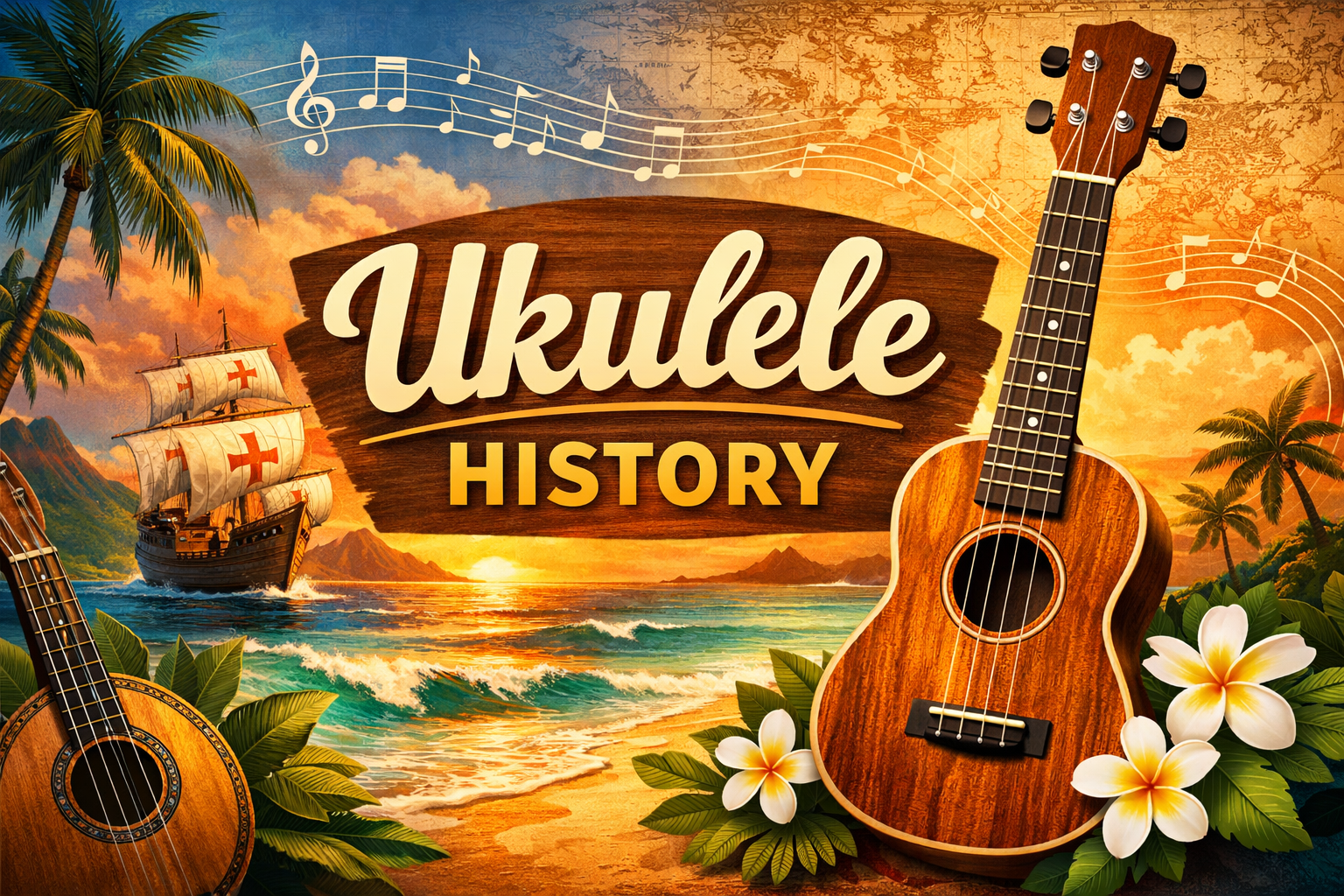
Ukulele history doesn’t start in Hawaii. It actually begins on the small Portuguese island of Madeira in the 1870s. Life was tough there. Many families struggled to make ends meet, so thousands of Madeirans boarded ships heading for better opportunities on Hawaii’s sugar plantations.
In August 1879, the ship SS Ravenscrag arrived in Honolulu Harbor. Among the passengers were three skilled cabinetmakers and part-time instrument makers: Manuel Nunes, Augusto Dias, and José do Espírito Santo. They had brought small Portuguese stringed instruments with them, including the braguinha (also called the machete), the cavaquinho, and the rajão.
These instruments were simple, four-stringed folk guitars that people played for entertainment after long days of work. The Hawaiians who heard the newcomers playing on the docks were captivated by the bright, cheerful sound. Before long, the Portuguese craftsmen began building new versions using local Hawaiian woods like koa. This marked the true birth of the modern ukulele.
What’s beautiful about this part of ukulele history is how quickly the instrument crossed cultures. It wasn’t planned or marketed—it simply happened through people sharing music during hard times.
How the Ukulele Got Its Name and Royal Approval
By the early 1880s, the instrument had earned its now-famous Hawaiian name. “Ukulele” means “jumping flea” in Hawaiian. The name came from watching players’ fingers move quickly up and down the fretboard, resembling fleas jumping around. According to Hawaiian cultural archives, this playful name perfectly captured the lively spirit of the new instrument.
Hawaiian royalty played a huge role in popularizing it. King David Kalākaua was a music lover who actively revived Hawaiian culture. He featured the ukulele at royal gatherings and parties. His sister, Queen Liliʻuokalani, also loved the instrument and even composed music on it. She once described it as a beloved part of Hawaiian identity.
Because of this royal support, the ukulele moved from plantation camps to royal courts and then into everyday Hawaiian life. It became a symbol of joy and cultural pride during a difficult period when Hawaii faced growing outside influence.
The Big Break: How the Ukulele Conquered America
Ukulele history took a major turn in 1915 at the Panama-Pacific International Exposition in San Francisco. Hawaiian musicians performed for huge crowds, and the ukulele’s sweet sound stood out. Visitors went home wanting their own.
By the 1920s, the Jazz Age had arrived, and the ukulele fit perfectly into the fun, carefree spirit of the time. Tin Pan Alley songwriters started creating hits featuring the instrument. Stars like Cliff “Ukulele Ike” Edwards became hugely popular, appearing in movies and even voicing Jiminy Cricket in Disney’s Pinocchio.
Across the ocean in Britain, George Formby turned the banjo-ukulele into a comedy sensation with his upbeat songs and cheeky personality. The ukulele had officially gone international.
Ups and Downs Through the Decades
Like many cultural icons, the ukulele experienced both peaks and quiet periods.
In the 1950s, American TV host Arthur Godfrey brought the ukulele into millions of living rooms. He encouraged viewers to buy one and learn to play, causing sales to explode. Plastic ukuleles became a common sight in homes across America.
The 1960s brought Tiny Tim’s quirky hit “Tiptoe Through the Tulips,” which made the ukulele famous again—but also turned it into something of a novelty act for some people.
Then came a quieter time until the 1990s. Hawaiian musician Israel “IZ” Kamakawiwoʻole released his beautiful medley of “Somewhere Over the Rainbow” and “What a Wonderful World.” Recorded with just his voice and a simple ukulele, the song touched hearts worldwide and introduced a whole new generation to the instrument’s gentle side.
In 2006, Jake Shimabukuro posted his incredible ukulele version of “While My Guitar Gently Weeps” on YouTube. The video went viral and proved that the ukulele could handle complex, emotional, and even rock-style playing. This moment helped spark the modern ukulele boom we’re still enjoying today.
Why Understanding Ukulele History Makes You a Better Player
Knowing the story behind the ukulele adds real depth to your playing. Here are some practical ways to connect with its history:
- Try traditional Hawaiian tuning. Many early players used high-G (re-entrant) tuning. It gives songs that classic bright, jumping sound. Start with “Aloha ‘Oe” to experience it.
- Choose quality over price. While cheap ukuleles are fine for beginners, investing in a solid-wood instrument (koa, mahogany, or acacia) will give you the warm tone that defined early Hawaiian ukuleles.
- Play with others. The ukulele was born in social settings—on ships, docks, and porches. Join a local ukulele group or host a casual jam session. You’ll learn faster and have more fun.
- Learn one classic Hawaiian song. Pieces like “Ke Aloha” or “My Little Grass Shack” connect you directly to the roots and teach beautiful phrasing.
- Don’t be afraid to experiment. From royal courts to viral videos, the ukulele has always adapted. Mix genres, try fingerpicking, or write your own simple songs.
The Ukulele Today: Still Spreading Joy Worldwide
Today, the ukulele is more popular than ever. Schools use it to teach music because it’s easy for small hands. Therapists recommend it for stress relief. Travelers love how easily it fits in a suitcase. YouTube and TikTok are full of players sharing everything from classical pieces to modern pop hits.
What makes ukulele history so inspiring is its message of resilience and joy. This small instrument traveled thousands of miles, survived changing times, and continues to bring people together across cultures and generations.
FAQs
Q1: Where did the ukulele originally come from?
A: The ukulele originated from Portuguese stringed instruments brought to Hawaii by immigrants from Madeira in 1879. Local craftsmen adapted them into the modern ukulele using Hawaiian woods.
Q2: What does “ukulele” mean?
A: In Hawaiian, “ukulele” means “jumping flea,” referring to the fast-moving fingers of players on the fretboard.
Q3: Who made the ukulele famous?
A: King Kalākaua and Queen Liliʻuokalani in Hawaii, then Cliff Edwards, Arthur Godfrey, Israel Kamakawiwoʻole, and Jake Shimabukuro helped popularize it globally.
Q4: Is the ukulele a Hawaiian instrument?
A: While it was developed and embraced in Hawaii, its direct ancestors are Portuguese instruments. Hawaiians shaped it into the instrument we know and love today.
Q5: When did the ukulele become popular?
A: It gained major popularity in the 1910s–1920s in America, had revivals in the 1950s and 1990s–2000s, and continues growing today through social media.
Final Thoughts: Your Turn to Join the Story
The ukulele’s journey from a simple Portuguese immigrant’s instrument to a worldwide phenomenon proves that big things often come in small packages. Its history is filled with migration, cultural sharing, royal favor, viral moments, and pure human connection.
So whether you’re just starting out or you’ve been playing for years, take a moment to appreciate the rich story in your hands. Pick up your ukulele today. Learn a traditional song. Play for friends. Create your own memories.
The jumping flea is still dancing—and it’s waiting for you to add the next chapter.
You may also read newsprimeo.