

I still remember staring at my screen at 2 a.m., heart pounding, as I uploaded a small set of hand-drawn root textures for a forest demo. I wasn’t expecting much—just hoping someone might notice. A few hours later, a friendly Discord message popped up: “These roots feel alive. Welcome as an undergrowthgames contributor.” That moment changed how I see indie game development. It showed me there’s a welcoming space for creators who want to build something meaningful without the soul-crushing crunch of big studios.
If you’re an artist, coder, writer, or sound designer tired of solo projects gathering dust, this guide will show you exactly what it takes to become an undergrowthgames contributor. You’ll learn the real roles, essential skills, proven application steps, benefits, and pitfalls to avoid—so you can start contributing confidently and grow your indie game career.
What Is an UndergrowthGames Contributor?
An undergrowthgames contributor is a creative collaborator who joins project-based work on the UndergrowthGames platform. You can explore open projects and contributor calls directly on the official site here: UndergrowthGames.
This community-driven hub focuses on atmospheric, nature-inspired indie games—think lush ecosystems, hidden mechanics, emotional storytelling, and cozy yet mysterious worlds.
Unlike traditional studio jobs, becoming an undergrowthgames contributor is flexible. You contribute on your own schedule, often for projects lasting 3–6 months. Roles range from environment art and procedural generation to narrative writing, sound design, UI polish, and even playtesting with meaningful feedback.
The platform thrives on small, passionate teams. One undergrowthgames contributor might animate swaying vines that react to player movement, while another crafts lore that makes a simple mushroom feel like a character with history. It’s collaboration at its most organic.
Why the UndergrowthGames Contributor Role Matters in Today’s Indie Scene
The games industry has grown louder and more commercial. Players, however, are craving quieter, more personal experiences—games that feel handcrafted rather than mass-produced. That’s where undergrowthgames contributors shine.
By joining, you help shape living worlds that emphasize exploration, discovery, and subtle emotion. Many contributors report higher creative satisfaction compared to freelance gigs or unfinished personal projects. Plus, the public nature of finished games on the platform gives you real shipped titles for your portfolio—something recruiters and publishers actively look for.
In short, becoming an undergrowthgames contributor isn’t just about adding assets. It’s about joining a supportive ecosystem where your unique voice actually influences the final game.
Essential Skills Every Successful UndergrowthGames Contributor Needs
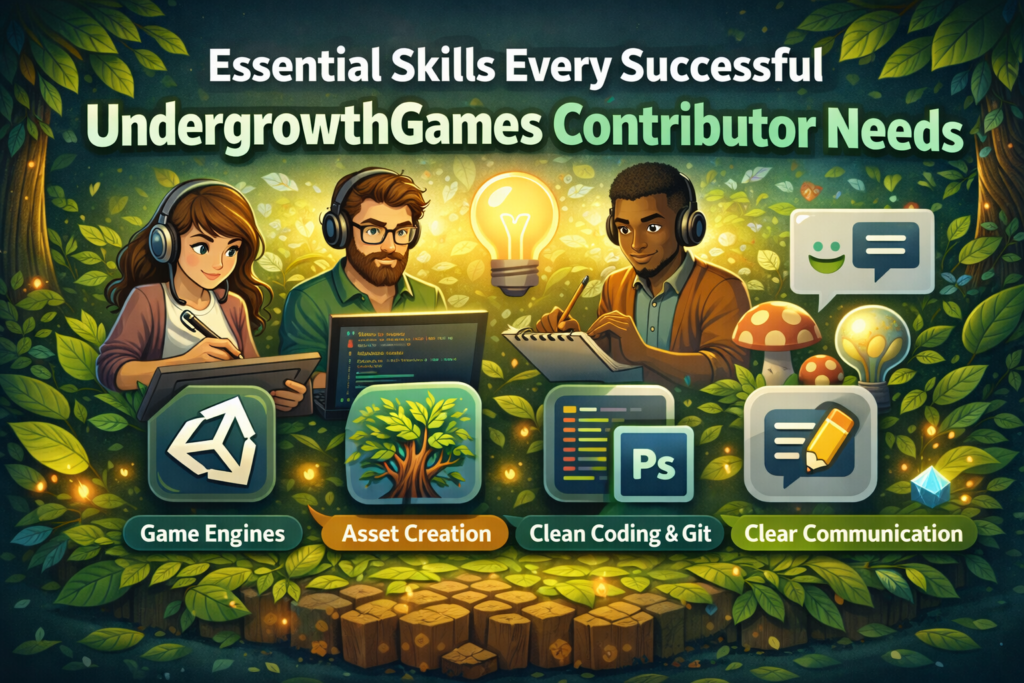
You don’t need years at a AAA studio to succeed. Most active undergrowthgames contributors come from varied backgrounds—hobbyists, freelancers, even career-switchers.
Core technical skills help:
- Proficiency in Unity or Godot
- Basic 2D/3D asset creation (Blender, Aseprite, Photoshop)
- Clean code or shader knowledge
- Version control with Git
But soft skills often matter more. The best undergrowthgames contributors communicate clearly, respect project lore, and iterate gracefully on feedback.
Here’s a practical checklist:
- Scope wisely — Deliver one polished piece rather than ten rough ones.
- Document everything — Comments, readmes, and process notes save the team headaches.
- Give constructive feedback — Focus on solutions, not problems.
- Stay consistent — Even small weekly updates build trust faster than sporadic big bursts.
Master these and you’ll quickly become a valued undergrowthgames contributor.
My Personal Journey as an UndergrowthGames Contributor
Three years ago I was burned out from mobile game live-ops. Endless events and metrics left me creatively drained. Late one night on itch.io, I discovered an open call for environment artists on Mycelium Drift, a nature-themed project.
I submitted three glowing fungi concepts with a short note explaining why the undergrowth should feel hopeful, not eerie. They accepted me the next day.
The following months were messy and magical: late voice calls fixing lighting bugs, celebrating when a simple animation made players smile, and watching strangers discover details I’d poured my heart into. That experience taught me that being an undergrowthgames contributor rebuilds your passion. It reminds you why you started making games in the first place.
Step-by-Step: How to Become an UndergrowthGames Contributor
Ready to apply? Follow this proven process:
- Research the platform — Browse active projects and Discord channels for a week. Understand the tone and current needs.
- Choose the right call — Pick one project that genuinely excites you instead of applying everywhere.
- Prepare a targeted submission — Send 2–4 polished examples relevant to the request, plus a brief, enthusiastic note.
- Follow up thoughtfully — Wait 3–4 days, then send a polite check-in.
- Onboard strongly — Once accepted, over-communicate for the first two weeks and ask clarifying questions early.
Many new undergrowthgames contributors land their first spot within 1–2 applications when they follow this approach.
Real Benefits of Becoming an UndergrowthGames Contributor
- Portfolio power — Finished games are publicly available with credits and often source access.
- Networking — Strong relationships frequently lead to paid gigs and future collaborations.
- Creative freedom — Teams vote on ideas, so good suggestions actually get implemented.
- Skill growth — You’ll work across disciplines and learn faster than in isolation.
- Community belonging — Regular contributors often describe it as one of the least toxic corners of indie dev.
Of course, it’s not perfect. Time zone differences, occasional scope creep, and the need for self-motivation are realities. Treat it professionally and the rewards far outweigh the challenges.
Mistakes to Avoid as a New UndergrowthGames Contributor
- Over-promising on your first task
- Going silent instead of communicating delays
- Treating the project like a solo endeavor instead of true collaboration
- Ignoring the shared lore or vision
Avoid these and you’ll build a reputation that keeps doors opening.
Future Outlook for UndergrowthGames Contributors
As indie gaming continues growing, platforms like UndergrowthGames that emphasize community and smaller scopes are gaining traction. Contributors who build a track record here often move into lead roles, launch their own projects, or attract publisher attention.
If you love nature-inspired themes, atmospheric design, or simply want to ship games with kind people, this path offers real long-term value.
The undergrowth is full of potential. Whether you’re just starting or looking to diversify your portfolio, becoming an undergrowthgames contributor could be the most rewarding step you take this year.
Start small, stay consistent, and let your contributions grow naturally—just like the worlds you’ll help build.
You may also read newsprimeo.