

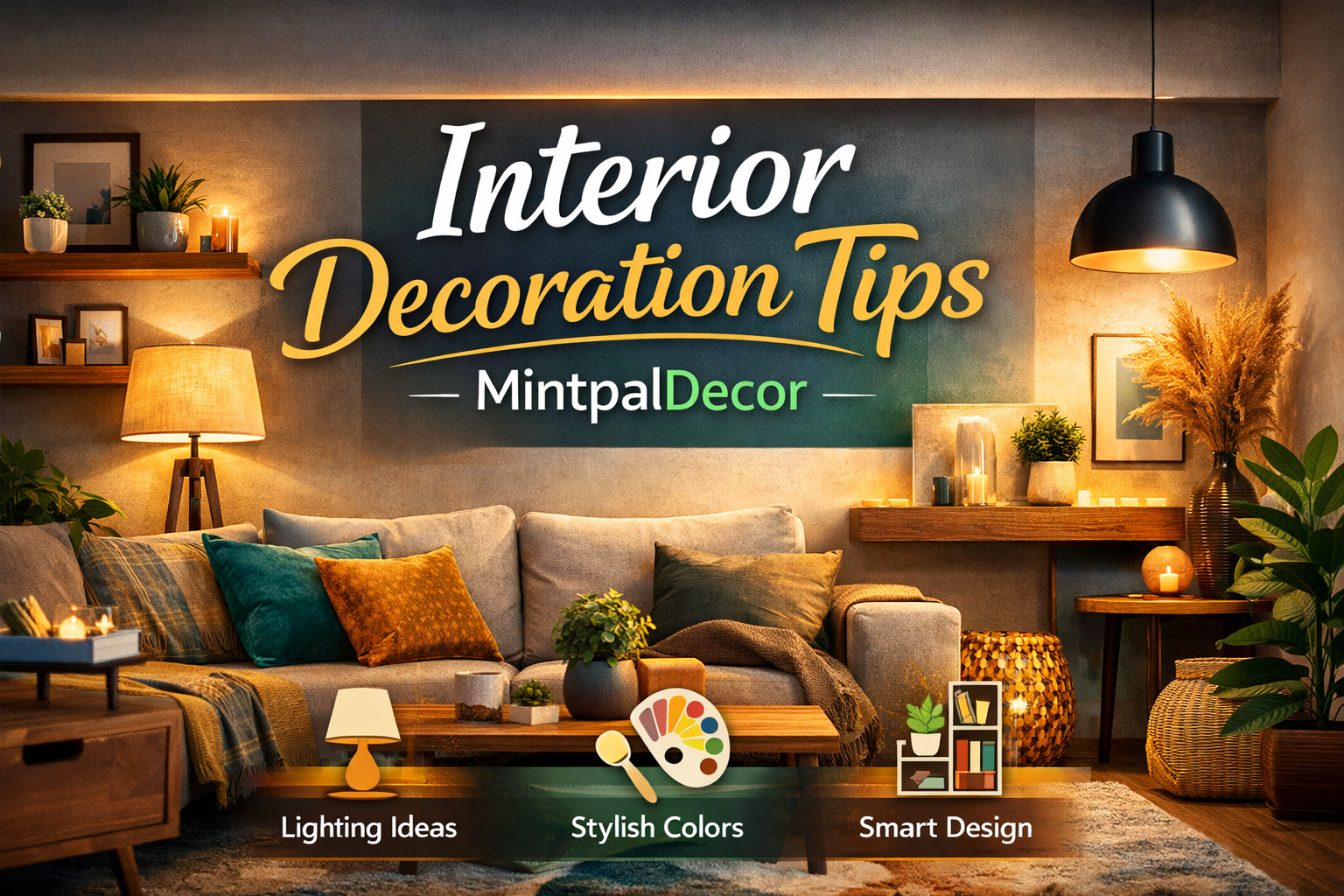
I’ve walked into hundreds of homes over the years, and the ones that feel truly special are rarely the most expensive. They’re the ones where every detail works together to create comfort, personality, and calm. If you’re looking to refresh your living space without stress or huge costs, these interior decoration tips MintpalDecor will help you create rooms that feel warm, welcoming, and completely yours.
Whether you live in a small apartment, a family house, or a new build, good decoration isn’t about following every trend. It’s about making thoughtful choices that improve how you live every single day. In this guide, I’ll share practical, proven ideas I’ve used with real clients—ideas you can start applying this weekend.
Why Interior Decoration Matters More Than You Think
Your home affects your mood, energy, and even relationships. A cluttered, dark room can make you feel tired. A well-decorated space with good light and comfortable seating can help you relax and enjoy time with family.
The secret lies in balance. You don’t need to buy everything new. Small, smart changes—like better lighting, the right colors, or clever furniture arrangement—can completely change how a room feels.
Start With Light: The Foundation of Every Great Room
Lighting is one of the most powerful yet overlooked tools in home decoration. Many people rely only on ceiling lights, which create harsh shadows and make spaces feel flat.
Try layering your lighting instead. Use three types:
- Ambient lighting – Main ceiling lights or recessed lights for overall brightness
- Task lighting – Table lamps, floor lamps, or desk lights for reading and working
- Accent lighting – Wall sconces, picture lights, or LED strips to highlight art or shelves
In one project, a client’s dark dining area felt cold and unwelcoming. We added a warm pendant light over the table, two wall sconces, and a floor lamp in the corner. The room instantly became the favorite gathering spot in the house.
Quick Tip: Install dimmer switches wherever possible. They let you change the mood from bright morning light to soft evening glow with one switch.
Choose Colors That Actually Work in Your Home
Color has the power to make a room feel bigger, cozier, calmer, or more energetic. The best approach is to test colors in your actual space before committing.
Here’s a simple method many people find helpful:
- Pick a main neutral color for walls (soft beige, warm gray, or off-white)
- Add depth with slightly darker or lighter tones of the same family
- Introduce one or two accent colors through cushions, rugs, or art
For small rooms, lighter colors help create a sense of space. In larger rooms, you can be bolder with deeper shades on one feature wall.
Remember that natural light changes color throughout the day. Paint a sample board and live with it for a few days before deciding.
Furniture Arrangement Secrets That Improve Daily Life
Many people push furniture against walls thinking it creates more space. In reality, pulling pieces away from walls and creating conversation zones often makes rooms feel larger and more comfortable.
Try these practical arrangements:
- Place sofas and chairs facing each other instead of all facing the TV
- Use a round coffee table in smaller spaces for easier movement
- Leave clear pathways of at least 2.5 to 3 feet between furniture
- Float your sofa with a console table behind it for storage and display
One family I worked with had a long, narrow living room that felt like a hallway. By angling two armchairs toward the sofa and adding a colorful rug, the room suddenly felt cozy and well-proportioned.
Add Texture and Layers for Warmth and Interest
Flat rooms lack soul. Mixing different textures brings warmth and visual interest without needing lots of color.
Great combinations include:
- Soft velvet or linen cushions on a leather sofa
- A chunky knit throw with smooth wooden furniture
- Matte walls paired with shiny metal or glass accents
- Natural fiber rugs (jute, sisal) layered over hardwood floors
These small details make a room feel collected and comfortable rather than showroom-perfect.
Smart Storage Solutions That Look Beautiful
Clutter kills good decoration faster than anything else. The trick is to combine storage with style.
Consider these ideas:
- Use ottomans with hidden storage
- Install floating shelves to display books and plants
- Choose coffee tables with drawers or lower shelves
- Use decorative baskets for toys, blankets, or magazines
In kids’ rooms or family areas, stylish storage is especially important. It keeps the space tidy while still looking intentional.
Bring Life With Plants and Greenery
Plants are one of the easiest ways to make any room feel fresh and alive. They soften hard lines, improve air quality, and add natural color.
Best beginner-friendly options:
- Snake plant (very hardy, low light)
- Pothos (trailing beauty, easy to grow)
- ZZ plant (almost impossible to kill)
- Peace lily (beautiful flowers, good for humidity)
Group plants at different heights—floor level, on tables, and hanging—for a natural, layered look. If you’re worried about maintenance, high-quality artificial plants can work well in low-light spots.
Window Treatments That Make a Big Difference
Curtains and blinds do more than block light. They add softness, color, and finish to a room.
Best practices:
- Hang curtains as high and wide as possible to make windows look larger
- Use linen or cotton for a natural feel
- Layer sheer curtains with heavier drapes for flexibility
- Consider Roman blinds or bamboo shades for a clean, modern look
Small Space Decoration Tips That Actually Work
Living in a compact home doesn’t mean sacrificing style. Focus on multi-functional furniture and clever illusions.
Effective strategies:
- Use mirrors to reflect light and make rooms feel bigger
- Choose furniture with slim legs to create visual space
- Opt for foldable or extendable dining tables
- Use vertical storage like tall bookshelves
A client in a studio apartment created distinct zones using a room divider shelf, different rugs, and strategic lighting. The small space now feels organized and spacious.
Common Mistakes to Avoid
Even experienced decorators make these errors sometimes:
- Buying everything in matching sets (it looks flat and boring)
- Ignoring scale (mix small, medium, and large items)
- Placing all accessories at the same height
- Forgetting to leave empty space (negative space is important)
- Choosing style over comfort
Always test furniture by sitting in it for several minutes in the store. Beautiful chairs that hurt after ten minutes will eventually go unused.
Budget-Friendly Ways to Upgrade Your Space
You don’t need a big budget to create a beautiful home. Some of the most effective changes cost very little:
- Rearrange existing furniture
- Paint one wall as an accent
- Update hardware on cabinets and drawers
- Add new cushions and throws
- Refresh lampshades
- Create a gallery wall with personal photos and affordable art prints
Thrift stores, online marketplaces, and garage sales often have hidden gems that just need a little cleaning or fresh paint.
Creating a Home That Reflects Your Personality
The most beautiful homes tell a story about the people who live there. Display travel souvenirs, family photos, inherited furniture, and meaningful objects.
Don’t be afraid to mix styles. A modern sofa can look wonderful with a vintage coffee table. Traditional art can shine in a contemporary setting. The mix makes your home unique.
FAQs
Q1: What are the most important interior decoration tips MintpalDecor for beginners?
A: Start with good lighting, choose a simple neutral color palette, and focus on comfortable furniture arrangement. Add texture with rugs, cushions, and plants for instant warmth.
Q2: How can I decorate my small apartment using MintpalDecor tips?
A: Use mirrors, light colors, multi-functional furniture, and vertical storage. Layer lighting and keep surfaces uncluttered to make the space feel larger and more open.
Q3: What colors work best according to interior decoration tips MintpalDecor?
A: Warm neutrals like soft beige, greige, and light gray are versatile. Add accent colors through accessories so you can change them easily when you want a fresh look.
Q4: How do I make my home look expensive on a budget?
A: Focus on quality lighting, mix high-street and vintage pieces, use beautiful textiles, and keep the space tidy. Good arrangement and thoughtful details matter more than expensive items.
Q5: Are plants really important in home decoration?
A: Yes. Plants add life, color, texture, and improve air quality. They soften a room and make it feel more welcoming and natural.
Conclusion: Start Small and Enjoy the Process
Great interior decoration doesn’t happen overnight. It grows gradually as you make thoughtful choices and live in your space.
Pick one room or even one corner to start with. Try new lighting, move a few pieces around, or add some plants. Notice how the changes make you feel. Your home should support your life and bring you joy every day.
Ready to transform your space? Begin with one simple change today. Your future self will thank you every time you walk through the door and feel truly at home.
What’s the first tip you’re going to try? Share your plans in the comments—I’d love to hear about your decorating journey!
You may also read newsprimeo.